No. 9 by Burin & Plate
The Quiet Craft of Lino Cutting
Linocut arrived in Britain almost by accident. Linoleum, the flooring material patented in the 1860s, wasn't designed with artists in mind — but its smooth, forgiving surface soon proved ideal for carving. It was during the 1920s that the medium truly found its voice in the UK, thanks largely to the Grosvenor School of Modern Art in Pimlico, London. Unlike the slow, expensive traditions of etching or wood engraving, lino offered something new: an accessible, affordable way to make striking, graphic images and it has held that appeal ever since.
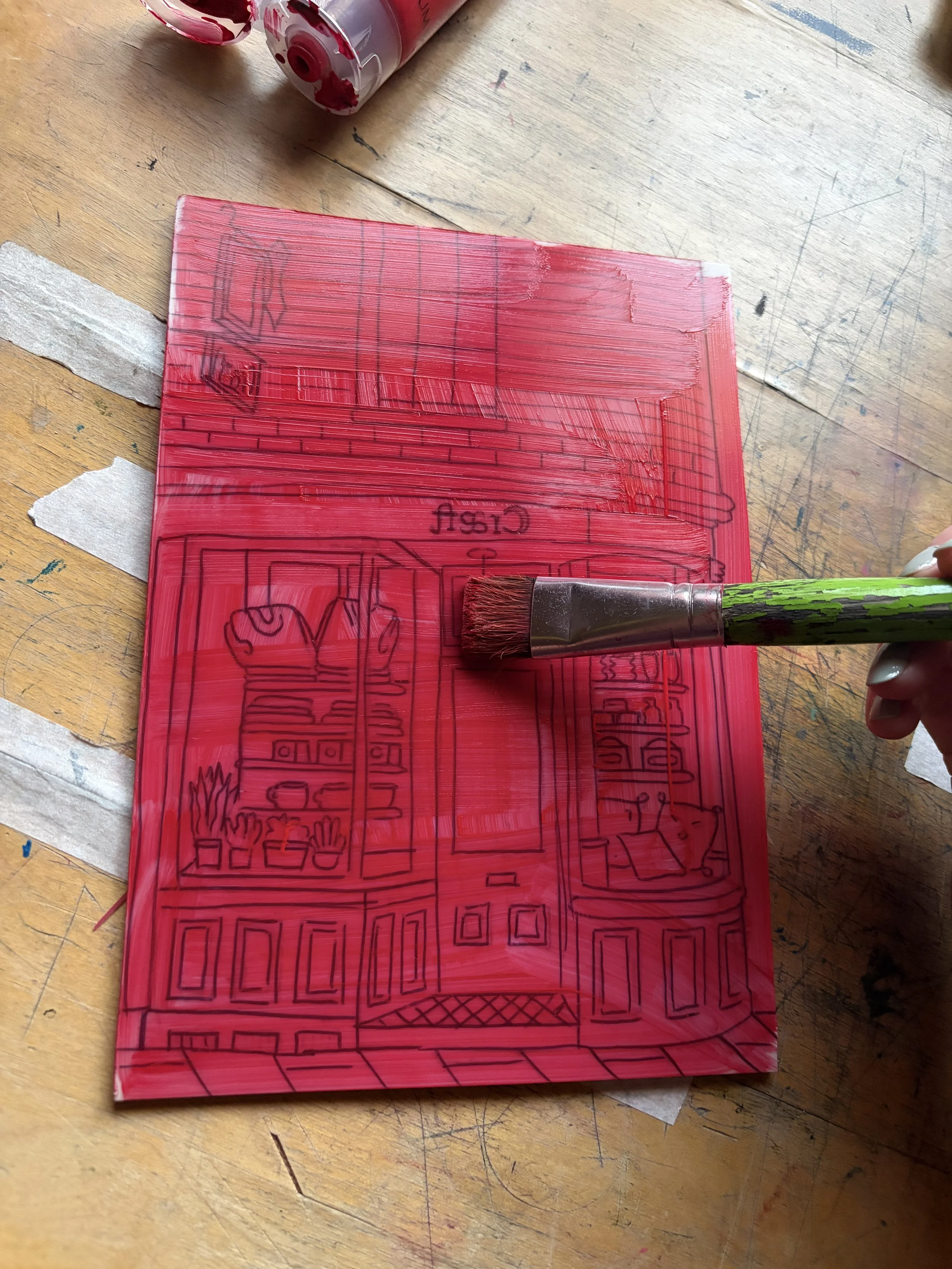
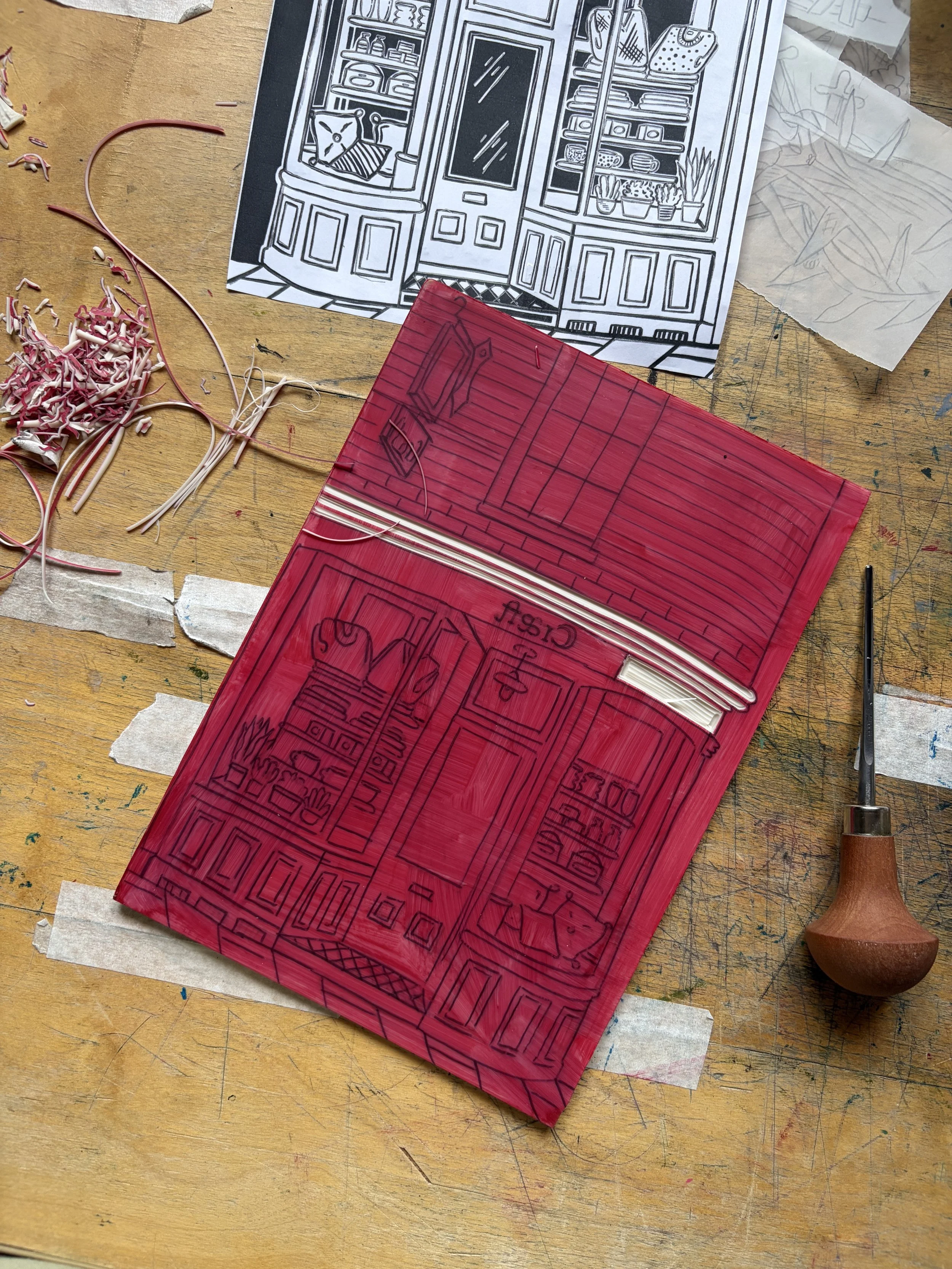
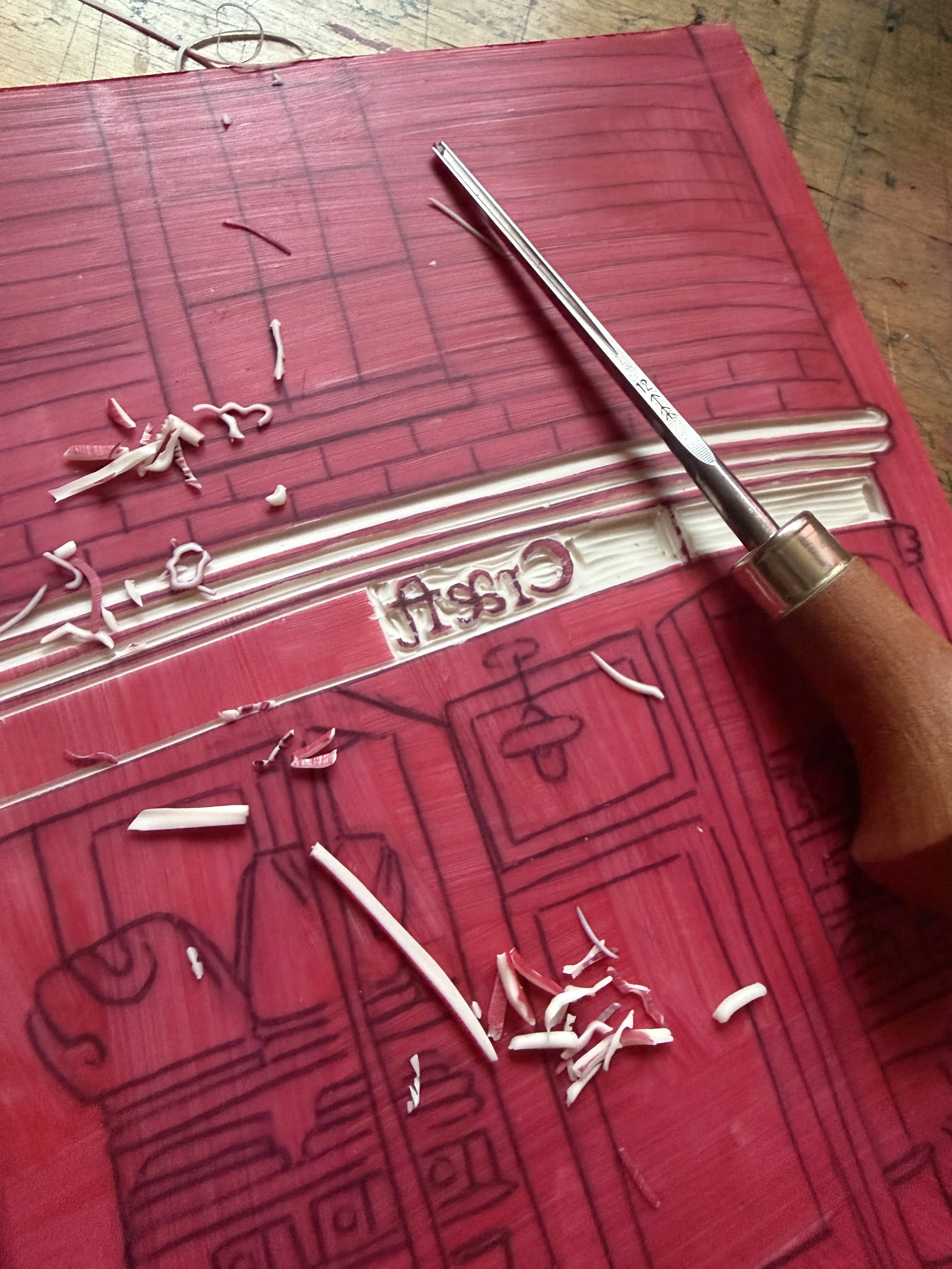
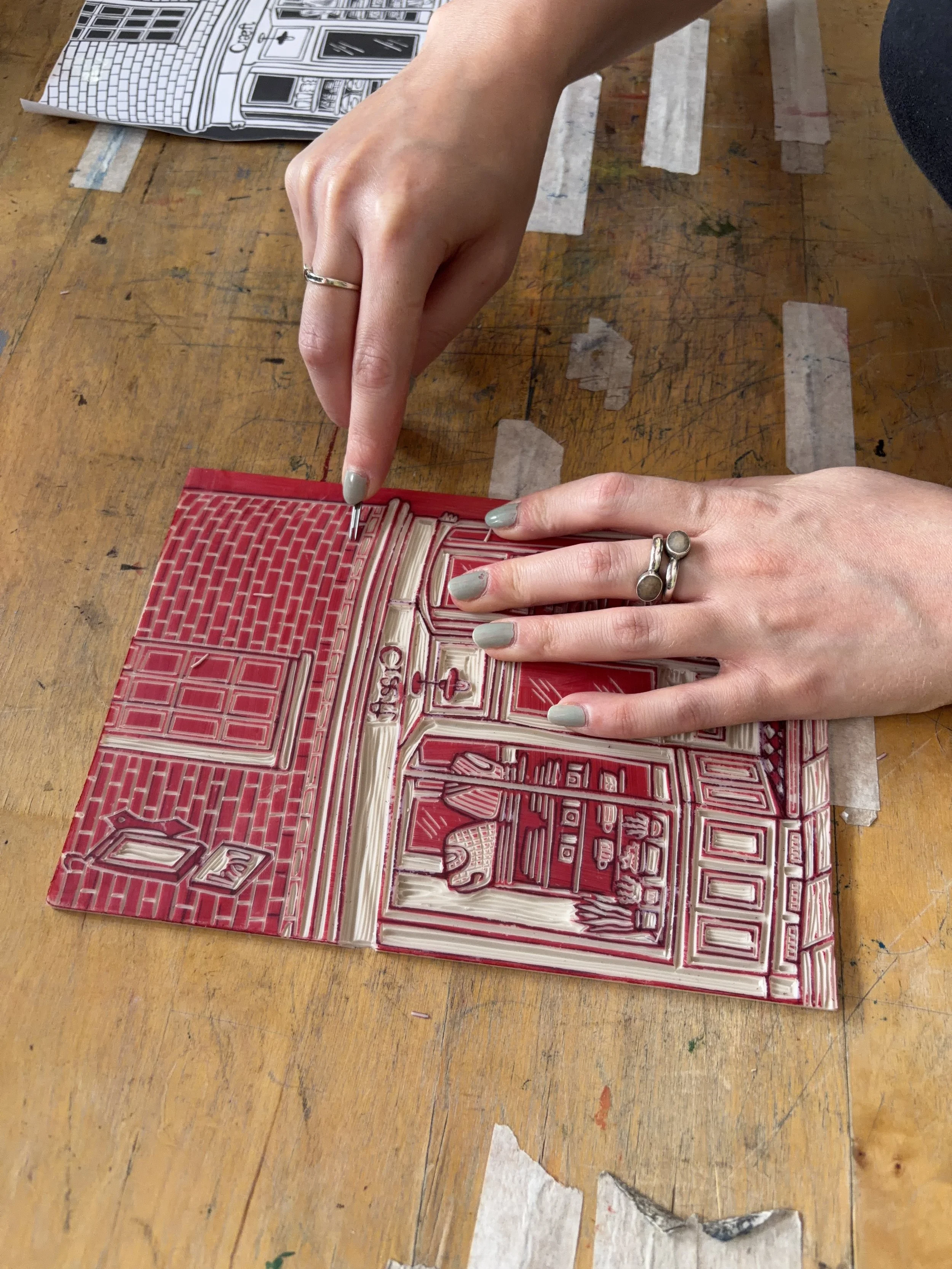
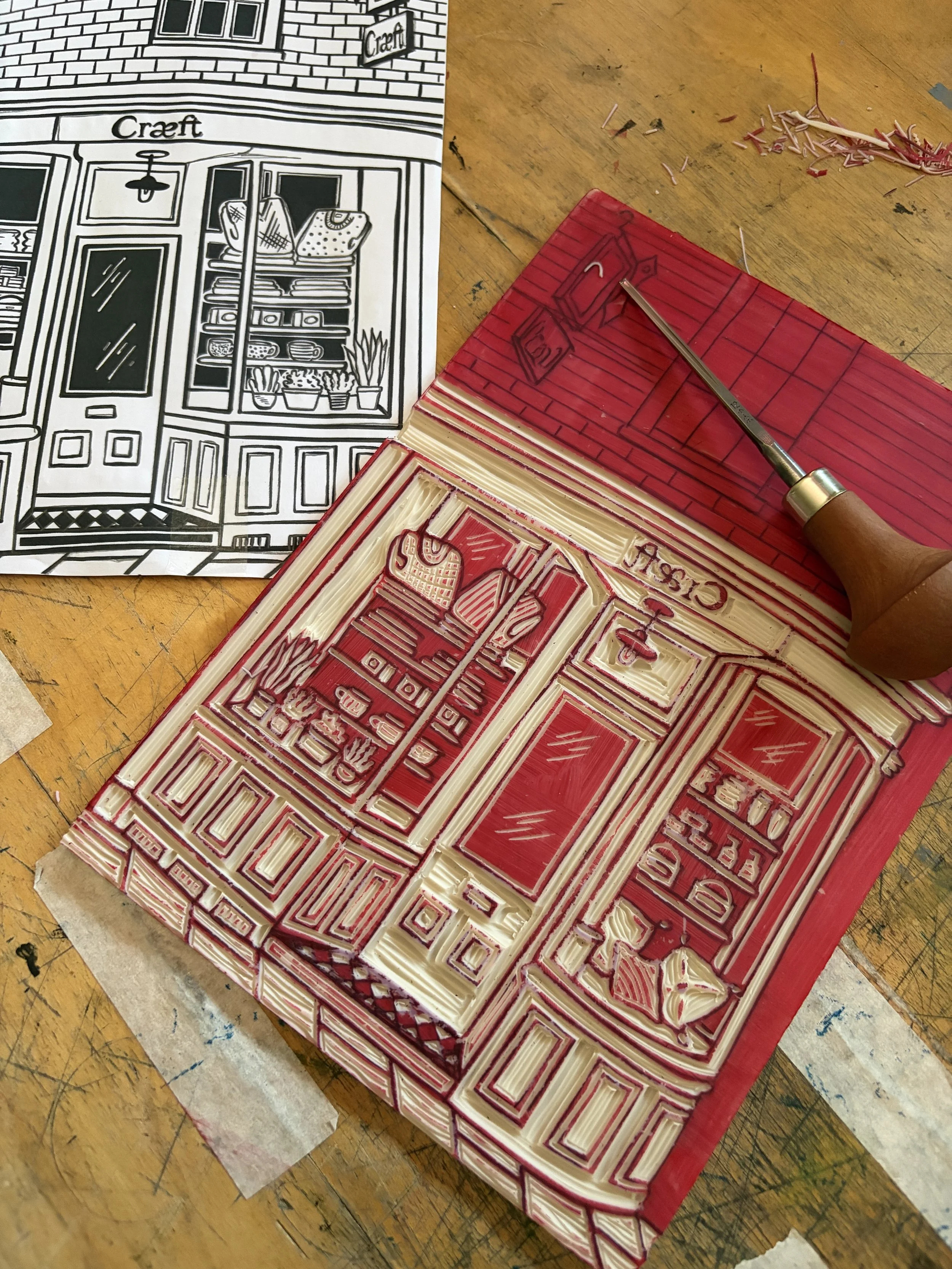
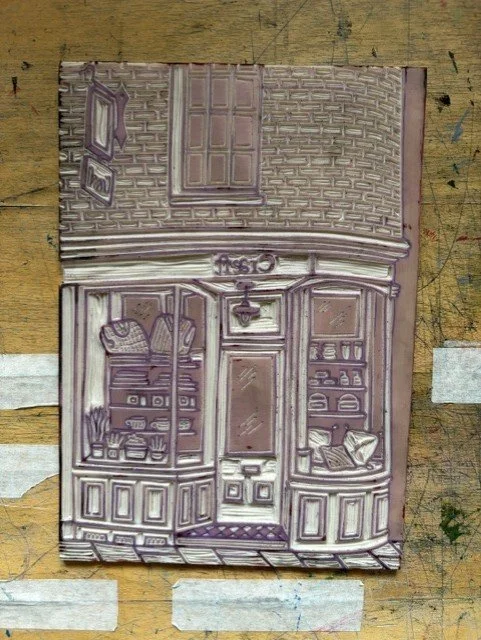
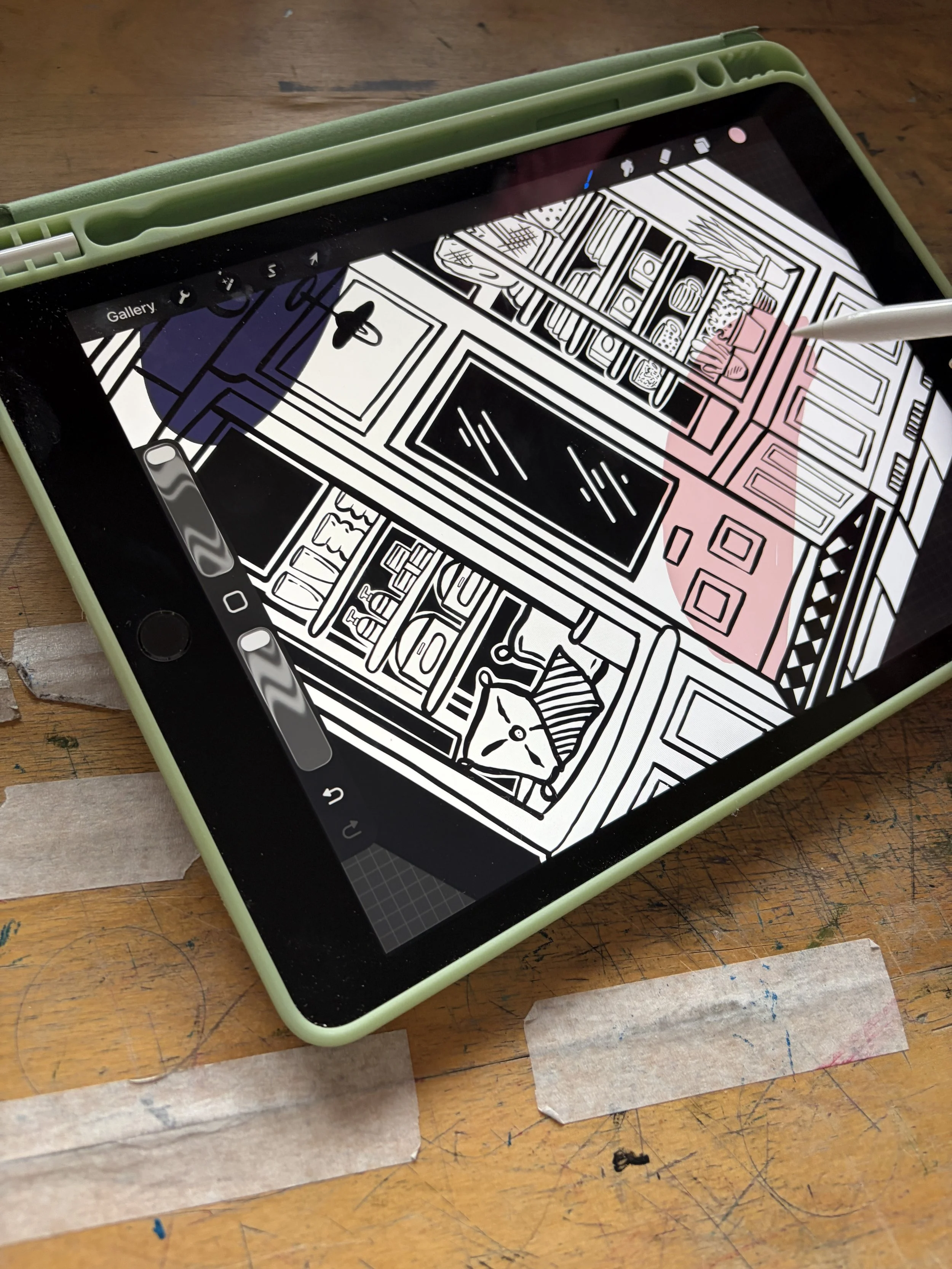
At its heart, the process is refreshingly hands-on. A design is drawn or transferred onto a block of lino, then cut away using a gouge — sometimes still called a burin, after the older engraving tool it descends from. These cutters typically come in V or U shaped profiles, the angle of the blade determining the width and character of each line; a fine V-tool is prized for delicate detail, while broader U-gouges clear larger areas.
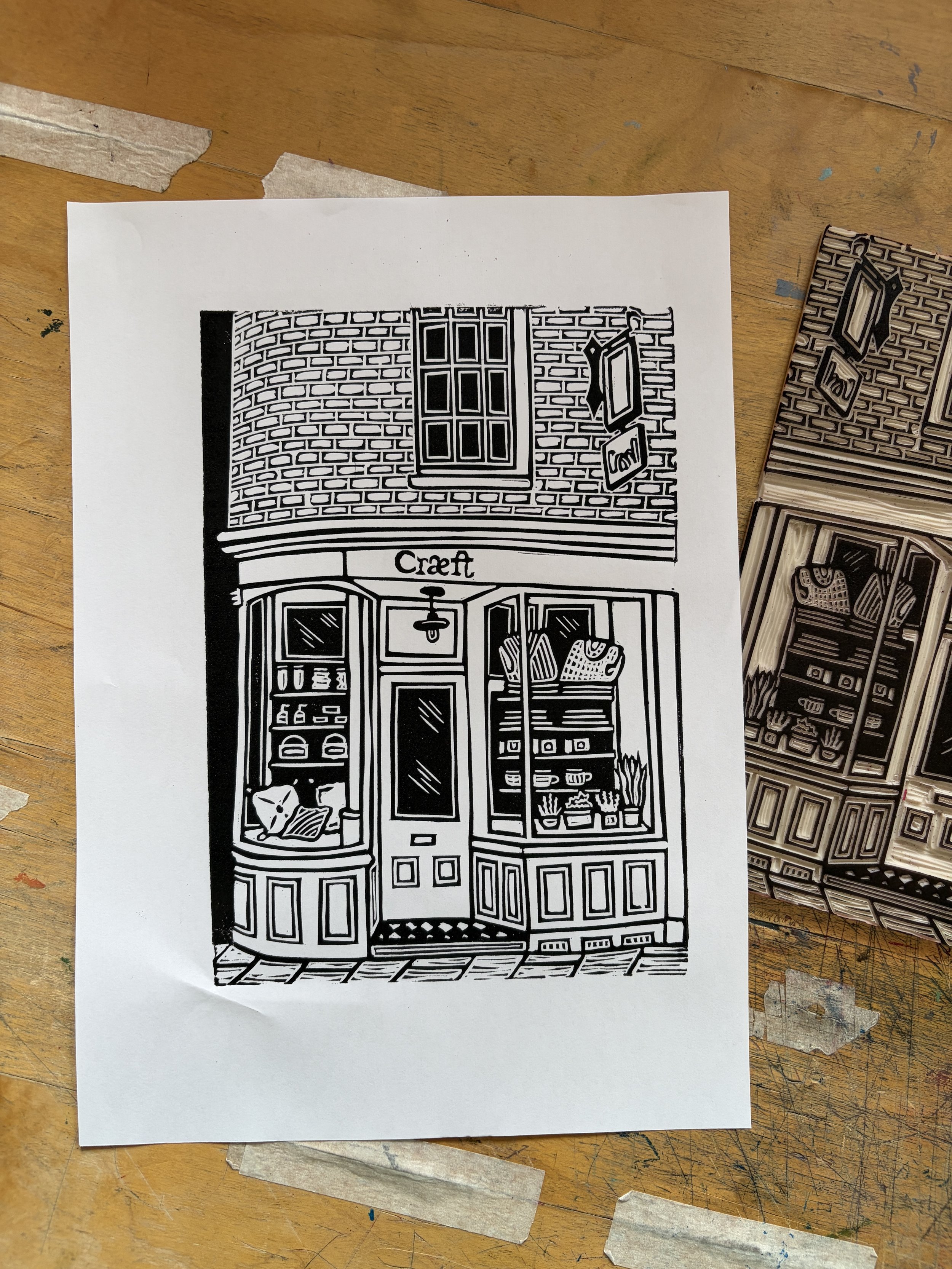
The block itself can range from soft, pliable "softcut" lino to the tougher grey traditional sheets favoured by purists, each offering a different resistance under the blade. Once carved, the raised surface is inked with a roller and pressed onto paper by hand or press, leaving a mirror image of the original design — every print carrying the small imperfections that make it unmistakably handmade.
There's something fitting about championing this craft from where we are. No. 9 The Borough has stood in this corner of Canterbury since the 1850’s, in the Northgate district that was built by and for working people. Linocut shares that same lineage: built for accessibility, for the everyday.
With thanks to Ella Flavell of Burin & Plate for her original linocut of No 9.
About the Printmaker
Ella Flavell is an art historian and printmaker from the West Midlands (UK). Since 2016 she has been producing linocut prints that celebrate everything from favourite films to iconic cityscapes, unique architecture to places that hold personal significance. She is particularly interested in the creation of graphic contrast, pattern, and texture, and the way that place can be both a repository for, and a medium of, memory and storytelling.
As a self-taught printmaker her practice has evolved through experimentation and playfulness, and seeks to encourage others to explore their own creativity by having fun with their materials during her talks and workshops.
Her work has been featured on the cover of Birmingham Design Magazine (2023), in the books Carving Blocks: Printmakers and Their Stories (2024), and Le Grande Livre de la Linogravure (Maslau, 2025), and in the exhibition Surreal Solihull (Solihull, 2025).
All Burin & Plate prints are made by hand, from the initial drawing to the carving and printing of the lino block.
Since 2026 she has been represented by IllustrationX.
https://www.burinandplate.co.uk/